Bitcoin Halving Explained: What It Means for Investors
Learn how Bitcoin halving works, why it reduces the creation of new coins, how it affects miners and market supply, and what investors should understand before making decisions based on the event.
CRYPTOCURRENCYFINANCIAL EDUCATION
7/26/202611 min read
Bitcoin does not need a central bank to decide when more coins should be created.
The rules were established in advance.
Approximately every four years, the amount of new bitcoin awarded for mining a block is automatically cut in half. No politician announces the change, no company approves it, and no investor can delay it.
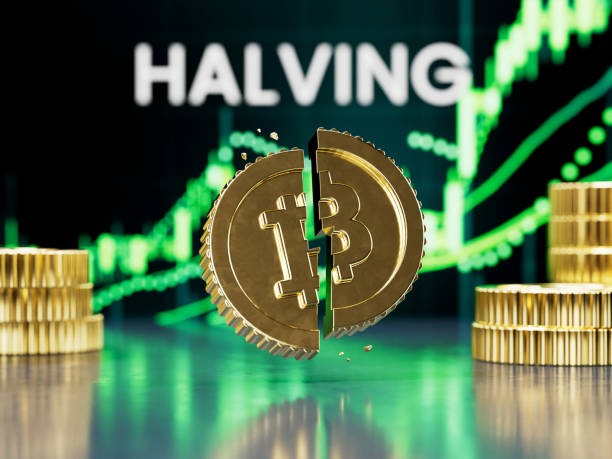
This event is called the Bitcoin halving.
It has become one of the most anticipated events in the cryptocurrency market because it reduces the flow of new bitcoin entering circulation. But the halving does not guarantee that the price will rise, and it does not suddenly make every Bitcoin investment profitable.
The truth is simpler: the halving changes supply. What happens to price still depends on demand.
What Is the Bitcoin Halving?
The Bitcoin halving is a programmed reduction in the block subsidy paid to miners. It occurs every 210,000 blocks, which has historically worked out to roughly once every four years. Bitcoin’s block subsidy began at 50 BTC in 2009 and has been reduced by half after each completed interval.
The most recent halving happened at block 840,000 on April 20, 2024. It reduced the subsidy from 6.25 BTC to 3.125 BTC per block. That subsidy is scheduled to remain in place until block 1,049,999, with the next reduction occurring at block 1,050,000.
The halving does not divide the bitcoin already held in your wallet.
Someone who owns 0.5 BTC before a halving still owns 0.5 BTC afterward. The event affects the creation of new bitcoin, not the balances of existing investors.
How Bitcoin Mining Rewards Work
Bitcoin miners use specialized computing equipment to compete for the opportunity to add a valid block of transactions to the blockchain. Mining helps confirm transactions and makes the network’s recorded history difficult to alter.
When a miner successfully produces a valid block, the block reward can contain two components:
The block subsidy, consisting of newly created bitcoin
Transaction fees paid by users whose transactions are included
Bitcoin’s developer documentation defines the block reward as the combination of the block subsidy and transaction fees.
The halving reduces only the subsidy.
It does not automatically cut transaction fees in half. If network users are paying substantial fees, a miner may still receive more than 3.125 BTC in total compensation for a block. The additional amount comes from fees rather than newly issued coins.
This distinction becomes increasingly important with every halving.
The subsidy becomes smaller, while transaction fees may eventually need to provide a larger portion of the incentive that supports mining activity.
Bitcoin’s Halving History
Bitcoin has completed four halvings since its creation:
PeriodBlock subsidy2009–201250 BTC2012–201625 BTC2016–202012.5 BTC2020–20246.25 BTC2024–next halving3.125 BTC
The first halving occurred at block 210,000 in November 2012. The second occurred at block 420,000 in July 2016, the third at block 630,000 in May 2020, and the fourth at block 840,000 in April 2024.
At the next halving, the subsidy is expected to fall from 3.125 BTC to 1.5625 BTC per block. The event is expected sometime in 2028, although the precise calendar date cannot be guaranteed because it depends on how quickly future blocks are produced.
The block height is certain.
The calendar date is an estimate.
Why Does Bitcoin Have Halvings?
Bitcoin was designed with a limited issuance schedule rather than an unlimited supply.
The halving gradually slows the rate at which new coins are created until Bitcoin approaches its maximum supply of 21 million coins. Bitcoin.org describes the event as a mechanism that enforces Bitcoin’s predictable issuance schedule and supply limit.
This creates a monetary system with rules that can be inspected in advance.
Investors can estimate how many new coins will be issued after a future block height. They do not need to wait for a central institution to decide whether the supply should increase more quickly.
That predictability is one of Bitcoin’s most distinctive characteristics.
It does not guarantee value.
It guarantees that the issuance rules are not supposed to change simply because demand becomes stronger or the market price rises.
What Changes Immediately After a Halving?
The clearest immediate change is miner revenue from the block subsidy.
Before the 2024 halving, a miner that produced a block could receive 6.25 newly created BTC before transaction fees. After the halving, the same achievement generated a subsidy of 3.125 BTC.
Assuming blocks continue to arrive approximately every ten minutes, the network currently produces roughly 144 blocks per day. At 3.125 BTC per block, that represents approximately 450 new BTC daily, compared with around 900 BTC before the 2024 halving. This is an approximation because actual block production varies.
The halving therefore reduces the daily flow of newly created coins by about half.
It does not remove half of the existing supply.
It does not force owners to sell.
It does not automatically create twice as much demand.
Why Investors Care About Reduced Supply
Price is influenced by the relationship between supply and demand.
When the amount of new bitcoin entering circulation declines, fewer newly mined coins may be available for miners to sell. If demand remains stable or increases, a slower rate of supply growth can create upward pressure on price.
That is the central investment argument behind the halving.
However, the word if is doing a great deal of work.
If demand weakens, the price can still fall. If investors become more interested in other assets, regulation changes, economic conditions deteriorate, or large holders sell, reduced issuance may not be enough to support the market.
Scarcity can make an asset more valuable when people want it.
Scarcity alone cannot create desire.
Does the Halving Automatically Increase Bitcoin’s Price?
No.
Bitcoin’s protocol controls issuance, but it does not control market demand. Bitcoin.org states that there is no guarantee Bitcoin’s price will increase and warns that its exchange value can move unpredictably. Investor.gov also describes Bitcoin exposure as highly speculative and volatile.
Investors sometimes speak about the halving as though the market must immediately rise because fewer coins are being created.
That conclusion overlooks several realities:
The halving schedule is publicly known years in advance.
Traders may buy before the event in anticipation.
Investors may sell after the event to take profits.
Demand can change independently of supply.
Broader economic conditions can overwhelm the halving narrative.
Bitcoin can remain volatile even when its long-term issuance falls.
A predictable event can still influence a market.
But because everyone knows it is coming, part of its expected impact may already be reflected in investor behavior before the event occurs.
Why Historical Performance Can Be Misleading
Bitcoin experienced substantial long-term price increases during periods following earlier halvings.
This history has encouraged the belief that every halving must begin another powerful bull market.
But four events are not a large statistical sample.
Bitcoin also changed dramatically between those cycles. The market became larger, institutional products expanded, regulations evolved, trading platforms developed, and global economic conditions changed.
The 2012 market was not the 2020 market.
The 2028 market will not be the 2024 market.
Historical patterns can provide context, but they cannot turn uncertainty into a promise. The SEC continues to warn investors that Bitcoin and products offering Bitcoin exposure can involve substantial volatility and speculative risk.
A pattern becomes dangerous when investors stop treating it as a possibility and begin treating it as a law.
How the Halving Affects Bitcoin Miners
For miners, a halving can immediately pressure profit margins.
Their subsidy revenue falls by 50% in BTC terms, while major operating costs such as electricity, equipment, facilities, cooling, maintenance, and financing do not automatically decline.
A mining business that was profitable before the halving may become unprofitable afterward, especially when it uses inefficient equipment or pays high electricity prices.
Miners may respond by:
Shutting down inefficient machines
Moving operations to regions with cheaper energy
Upgrading to more efficient hardware
Selling larger portions of their bitcoin reserves
Seeking lower financing costs
Depending more heavily on transaction fees
Expanding only when market conditions justify it
The halving rewards efficiency.
It does not reward every miner equally.
The companies with the largest operations are not automatically the safest. Debt, energy contracts, equipment quality, management, and access to capital can matter as much as computing power.
Can Miners Leaving Make Bitcoin Less Secure?
Bitcoin’s mining difficulty is designed to adjust periodically based on how quickly blocks have been produced.
The network evaluates block timing every 2,016 blocks and adjusts the difficulty of producing new blocks. If substantial mining power leaves, blocks may temporarily arrive more slowly until the next adjustment makes mining easier.
A major and lasting reduction in total computing power could reduce the cost of attempting certain attacks. However, the relationship between a halving and network security is not as simple as assuming that half the reward produces half the security.
Several factors matter:
Bitcoin’s market price
Transaction-fee revenue
Mining-equipment efficiency
Electricity costs
Total network computing power
Competition among miners
Difficulty adjustments
A higher Bitcoin price can partially compensate miners for receiving fewer BTC. Strong transaction fees can also replace part of the lost subsidy.
The network does not need every individual mining company to survive.
It needs enough competitive computing power to continue producing and protecting blocks.
Why Transaction Fees Matter More Over Time
Because the subsidy continues shrinking, Bitcoin mining is expected to rely increasingly on transaction fees.
Bitcoin’s supply schedule gradually approaches the 21-million-coin limit, at which point newly created subsidies are expected to end. Bitcoin.org explains that miners would then be supported primarily by transaction fees.
This raises a long-term question: will users generate enough fee revenue to maintain strong mining incentives as subsidies become much smaller?
There is no final answer yet.
Future transaction demand, technology, network usage, Bitcoin’s price, and the development of additional payment layers could all influence that outcome.
The halving is not only an investor event.
It is also part of a multi-decade experiment in how a decentralized network can continue paying for its own security.
What the Halving Does Not Change
The halving does not directly change:
The amount of bitcoin already owned
Bitcoin’s maximum supply
The basic ability to send transactions
The ownership recorded on the blockchain
The market price at a predetermined moment
The number of coins an investor receives from an existing purchase
The transaction fees selected by users and miners
The fundamental requirement to protect private keys
It also does not make Bitcoin safer from price declines, scams, exchange failures, poor custody decisions, or emotional investing.
Reducing new supply solves one specific problem.
It does not eliminate every other risk.
Halving vs. Stock Splits
A Bitcoin halving is sometimes confused with a stock split.
They are not the same.
During a stock split, a company increases the number of shares while proportionally reducing the price per share. The shareholder owns more units, but the total value does not automatically change because of the split itself.
During a Bitcoin halving, existing owners receive no additional coins and lose none. Only the future mining subsidy changes.
It is closer to reducing the rate of production than dividing an existing investment.
Imagine a gold mine producing 100 ounces each month and then reducing production to 50 ounces. The gold already held by investors remains untouched. The flow of new supply becomes smaller.
That is the basic economic idea behind the halving.
How Investors Can Gain Exposure to Bitcoin
Investors may gain Bitcoin exposure in different ways, including purchasing bitcoin directly or using certain exchange-traded products.
Direct ownership normally requires the investor or a chosen custodian to manage crypto-asset storage. Losing access to private keys, sending funds incorrectly, or relying on a failed platform can create significant risks.
A Bitcoin exchange-traded product may provide price exposure without requiring the investor to personally use a crypto wallet, although the product may introduce management fees, tracking differences, market-price fluctuations, and dependence on the fund’s custodian and structure. Investor.gov notes that Bitcoin ETPs may remove some direct wallet-related responsibilities but remain speculative and volatile investments.
The halving affects Bitcoin’s underlying issuance regardless of how the investor gains exposure.
But the investor’s costs and risks can differ significantly depending on the method chosen.
Should You Buy Bitcoin Before a Halving?
Buying solely because a countdown is approaching is not a complete investment strategy.
Before investing, consider:
Whether you understand how Bitcoin works
How much of your portfolio would be exposed
Whether you can tolerate large price declines
When you may need the money
Whether you have emergency savings
Whether you carry high-interest debt
How you will store the asset
What fees and taxes may apply
What would cause you to sell
A halving can strengthen a long-term scarcity argument.
It cannot determine whether Bitcoin is appropriate for your personal financial situation.
Money needed for rent, emergencies, debt payments, education, or near-term goals should not depend on a highly volatile asset rising at the right moment.
Investor.gov advises investors to evaluate their risk tolerance carefully before using products connected to Bitcoin or other crypto assets.
Buying Before vs. Buying After
Some investors try to purchase before the halving because they expect demand to increase afterward.
Others wait because they believe anticipation has already pushed prices higher.
Both approaches depend on predicting how millions of other market participants will behave.
No one knows with certainty whether the best price will appear before the halving, immediately afterward, or during an unrelated market decline months later.
A beginner may find a disciplined strategy more practical than trying to identify one perfect date.
For example, an investor who has decided that Bitcoin fits their risk tolerance might invest a fixed amount at regular intervals rather than committing everything based on one event.
This approach cannot prevent losses.
But it can reduce the pressure to make one prediction determine the entire result.
Common Halving Mistakes
Assuming a Price Increase Is Guaranteed
The halving reduces new issuance. It does not guarantee stronger demand.
Investing Money Needed Soon
Bitcoin may decline sharply and remain below an investor’s purchase price when the money is needed.
Using Leverage
Borrowed money can magnify gains, but it can also create rapid losses, liquidation, and debt.
Buying Without Understanding Custody
A profitable investment is meaningless when access is lost or funds are sent to the wrong address.
Ignoring Fees and Taxes
Trading fees, spreads, withdrawal costs, product expenses, and applicable taxes can reduce returns.
Investing Everything at Once
A concentrated purchase leaves the investor highly dependent on one entry price.
Buying Mining Stocks as Though They Were Bitcoin
Mining companies face corporate risks that Bitcoin itself does not, including debt, dilution, equipment costs, energy contracts, management decisions, and operational failures.
Believing the Countdown Predicts the Market
The protocol knows when issuance will change.
It does not know what investors will be willing to pay.
What Should Investors Watch After a Halving?
Instead of watching only the price, investors can examine several broader factors:
Miner Economics
Are mining companies remaining profitable, upgrading equipment, reducing operations, or selling reserves?
Network Computing Power
Changes in total mining activity can indicate how miners are responding to the new reward environment.
Transaction Fees
Higher fees may help compensate miners for the smaller subsidy, although expensive transactions can also make the network less attractive for certain uses.
Investor Demand
Demand from individuals, companies, funds, and other market participants ultimately influences whether reduced issuance affects the price.
Regulation
Legal and regulatory changes can affect exchanges, investment products, taxes, custody, and market access.
Global Liquidity
Interest rates, available credit, investor confidence, and appetite for risk can influence Bitcoin alongside the halving.
The event matters.
The environment surrounding it matters too.
When Is the Next Bitcoin Halving?
The next Bitcoin halving is programmed to occur at block 1,050,000.
It is expected sometime in 2028, but the exact date will remain uncertain until the network moves closer to that block height. After the event, the block subsidy is expected to decline from 3.125 BTC to 1.5625 BTC.
Different countdown websites may display different estimated dates because they use assumptions about future block-production speed.
The protocol does not say, “Halve on a particular date.”
It says, “Halve at a particular block.”
What the Halving Really Means for Investors
The Bitcoin halving is important because it makes new supply grow more slowly.
That scarcity is real.
The future price is not predetermined.
For miners, the event creates immediate pressure to become more efficient. For the network, it gradually shifts economic importance from newly created coins toward transaction fees. For investors, it reinforces Bitcoin’s predictable supply schedule while creating another period of speculation, expectations, and volatility.
The smartest response is not blind excitement or automatic rejection.
It is understanding exactly what changed.
The halving does not create demand. It does not eliminate risk. It does not promise that history will repeat itself.
What it does is reduce the amount of new bitcoin entering the market according to rules established long before today’s investors arrived.
That may influence value over time.
But the investor still needs patience, risk control, secure custody, and a plan capable of surviving when the market refuses to follow the expected script.
Continue Reading
Finance Atlas
Demystifying global markets, compounding structural wealth.
Sitemap
Home
Articles
Categories
About
Contact
Privacy
© 2026 Finance Atlas-Independent financial intelligence.
Institutional Authority. Clear Utility.