Credit Score Explained: 7 Ways to Improve It Faster
Learn how credit scores work and discover seven practical ways to improve yours faster by correcting report errors, paying on time, lowering credit utilization, and building a stronger borrowing history.
BANKING & CREDITFINANCIAL EDUCATION
7/26/202612 min read

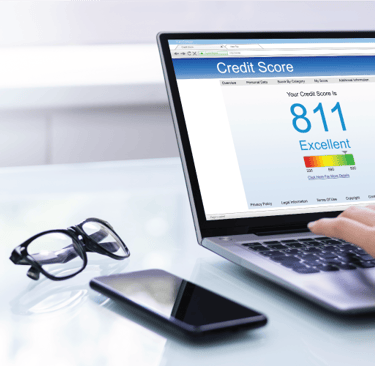
A low credit score does not remove money from your bank account, but it can quietly make almost everything you finance more expensive.
The same car, mortgage, or personal loan may cost one borrower thousands of dollars more than another—not because the product is different, but because the lender sees greater risk.
That is why improving your credit score is not only about receiving approval. It is about paying less for access to money.
The good news is that credit scores are not permanent labels. They respond to the information in your credit reports. When that information improves, your scores may improve too.
But there is no legitimate button that instantly creates excellent credit. Some changes may appear after the next reporting cycle, while rebuilding a damaged payment history can take much longer.
The fastest safe strategy is not searching for a loophole. It is identifying which parts of your credit profile are holding you back and improving the factors you can control.
This guide focuses primarily on the United States credit system. Credit reporting and scoring work differently in other countries.
What Is a Credit Score?
A credit score is a number created from information in your credit report. Lenders use it to estimate how likely you are to repay borrowed money.
Many credit scores range from 300 to 850, although different companies and scoring models may use different ranges. A higher score generally makes it easier to qualify for credit and may help you receive lower interest rates or better loan terms.
Your credit report and credit score are related, but they are not the same thing.
A credit report contains information about your credit accounts, balances, payment history, and current borrowing situation. A credit score applies a mathematical model to information from that report and produces a number.
Think of the report as the information.
The score is one interpretation of that information.
You Do Not Have Only One Credit Score
Many consumers expect to find one official score that every lender sees.
In reality, you may have several scores.
The number can differ depending on:
The scoring company
The version of the scoring model
The credit bureau supplying the data
The type of loan being considered
The date the score was calculated
Which accounts had been updated at that time
The CFPB explains that different lenders may use different scoring models and that even FICO scores can vary by model and credit-reporting company.
This means the score displayed by a banking app may not be identical to the score a mortgage lender uses.
That does not make the number useless. It simply means you should focus more on improving the underlying report than obsessing over small differences between apps.
A stronger credit profile tends to help across multiple scoring systems.
What Affects a FICO Score?
FICO identifies five major categories used in its widely used scoring models:
Credit factorApproximate importancePayment history35%Amounts owed30%Length of credit history15%New credit10%Credit mix10%
These percentages are general guidelines rather than a guaranteed formula for every person. Their influence can vary depending on the information in an individual credit report.
The categories reveal something important.
Most of your score is not based on how wealthy you appear. It is based on how responsibly you have managed borrowed money.
A large salary does not automatically create an excellent score. Someone with modest income who consistently pays on time and keeps card balances controlled may have stronger credit than a high earner who frequently misses payments.
Credit scores measure borrowing behavior—not personal worth.
How Quickly Can a Credit Score Improve?
The honest answer is: it depends on what is hurting it.
A high credit-card balance may affect a score differently once the issuer reports a lower balance. An inaccurate collection account might stop influencing your report after a successful dispute. Those situations can sometimes produce relatively quick changes.
Late payments, defaults, collections, and other serious negative information are different. Their influence may weaken as positive history grows, but accurate negative information generally cannot be legally erased simply because you want a faster result.
Your starting profile matters too.
Reducing a card balance may have a larger effect for someone with very high utilization than for someone already using little available credit. Opening a first account can help someone with no history, while opening another account may temporarily hurt someone who already has several recent applications.
The exact number of points cannot be predicted responsibly without knowing the full report and scoring model.
Anyone promising a specific increase by a guaranteed date should be treated cautiously.
1. Check All Three Credit Reports for Errors
Before changing your financial behavior, verify that your credit reports are accurate.
An excellent payment record cannot fully protect you when someone else’s account, an incorrect late payment, a duplicated debt, or outdated information appears in your file.
In the United States, AnnualCreditReport.com is the official federally authorized website for obtaining reports from Equifax, Experian, and TransUnion. Free reports are currently available weekly. Requesting your own reports does not damage your credit scores.
Review each report carefully for:
Accounts you do not recognize
Payments incorrectly marked late
Balances that have not been updated
Debts listed more than once
Accounts belonging to someone with a similar name
Incorrect credit limits
Closed accounts incorrectly shown as open
Identity-theft activity
Negative information that should no longer appear
The three reports may not contain identical information because every creditor does not necessarily report to every bureau.
When you find an error, dispute it with the credit bureau displaying the information and with the company that supplied it. Under federal law, inaccurate or incomplete information must be investigated and corrected without charging you. Include copies of supporting documents and keep records of your communication.
Disputing accurate negative information is not a legitimate credit strategy.
Correcting a real mistake can help.
Attempting to erase truthful information through false disputes can create new problems while leaving the underlying credit behavior unchanged.
2. Make Every Payment on Time
Payment history is generally the most influential FICO category, accounting for approximately 35% of the score calculation. It shows whether you have consistently repaid credit accounts according to their agreements.
This makes paying on time the foundation of credit improvement.
A person can use very little available credit and avoid new applications, but repeated missed payments will still make lenders nervous.
To protect your payment history:
Enable automatic minimum payments
Set reminders several days before due dates
Keep bill dates on one calendar
Maintain a small cushion in the payment account
Ask issuers whether due dates can be changed
Contact lenders before missing a payment
Review automatic payments regularly
Automatic payments are useful, but they are not completely automatic in practice. A changed bank account, insufficient balance, expired card, or technical problem can still cause a missed payment.
Check that the transaction was completed.
Paying at least the required minimum by the due date protects your payment record, but it does not prevent interest from accumulating. Whenever possible, pay credit-card statement balances in full.
You do not need to carry debt and pay interest to build a good credit score. FICO states that card balances can be paid in full while still maintaining low reported utilization.
Paying interest is a cost.
It is not proof of financial responsibility.
3. Lower Your Credit-Card Utilization
Credit utilization compares your reported revolving balances with your available revolving credit limits.
For example, if a card has a $5,000 limit and reports a $2,000 balance, its utilization is 40%.
Scoring models may examine both:
Utilization on each individual card
Utilization across all revolving accounts
Amounts owed represent approximately 30% of a typical FICO score, and revolving utilization is an important part of that category. Lower utilization generally presents less risk than using a large portion of available credit.
There is no universal threshold that guarantees a specific score increase.
The familiar advice to stay below 30% can be a useful starting point, but it should not be treated as a magical dividing line. Lower reported utilization is generally better, provided you continue using credit responsibly and avoid unnecessary debt.
Ways to reduce it include:
Paying down card balances
Making payments before the statement closes
Making more than one payment each month
Spreading necessary purchases across cards responsibly
Requesting a higher limit without increasing spending
Avoiding purchases that push one card near its limit
The balance affecting your score may be the amount reported by the issuer, not necessarily the amount remaining after your most recent payment.
The CFPB notes that scores can be calculated while a high balance is still being reported, even when the cardholder pays it in full shortly afterward.
Suppose you charge $1,500 to a card with a $2,000 limit and pay it completely after receiving the statement. You may avoid interest, but the issuer could still report a $1,500 balance, creating 75% utilization for that reporting period.
Paying part of the balance before the statement closes may reduce the amount reported.
This can be one of the faster legitimate ways to improve a score when high utilization is the primary problem.
But do not move debt from one card to another and call it progress.
Lower utilization helps most when the debt itself is genuinely declining.
4. Avoid Unnecessary Credit Applications
When you apply for a credit card or loan, the lender may conduct a hard inquiry into your credit report.
A single inquiry is not usually catastrophic, but several applications within a short period can make you appear financially stressed—particularly when your credit history is limited.
New credit accounts for approximately 10% of a typical FICO score. Opening several accounts can create inquiries and reduce the average age of your credit history.
Before applying, ask:
Do I genuinely need this account?
Am I likely to qualify?
Does the issuer offer prequalification with a soft inquiry?
Am I applying only for a temporary discount?
Will the new payment fit comfortably in my budget?
Am I preparing for a major loan soon?
Checking your own report is a soft inquiry and does not hurt your score.
Credit-scoring models also recognize that consumers shop for rates. Multiple inquiries for certain types of loans may be treated as one when they occur within a reasonably short shopping period.
That does not mean applying everywhere without a plan.
Comparison shopping for one mortgage is different from opening several unrelated credit cards, personal loans, and retail accounts in the same month.
Access to more credit can be useful.
Constantly requesting it can signal that your finances are under pressure.
5. Keep Older Accounts Open When It Makes Sense
Length of credit history represents approximately 15% of a typical FICO score.
Models may consider:
The age of your oldest account
The age of your newest account
The average age of all accounts
How long specific account types have been used
How recently accounts were active
A longer history of responsible credit management can help lenders see how you behave over time.
Closing an old credit card does not always cause immediate score damage through account age, because closed accounts may remain on reports for a period of time.
However, closing a card removes its available limit from future utilization calculations. If you carry balances on other cards, your overall utilization may increase.
Imagine you have two cards:
Card A: $0 balance and $5,000 limit
Card B: $2,000 balance and $5,000 limit
With both cards open, total utilization is 20%.
After closing Card A, your available credit falls to $5,000 and utilization rises to 40%, even though the debt did not change.
Keeping an older no-fee card open may therefore help preserve available credit and account history.
But do not keep every account under all circumstances.
Closing may be reasonable when a card:
Charges an annual fee that provides no value
Encourages spending you struggle to control
Has poor terms
Creates fraud or account-management concerns
Is connected to an institution you no longer trust
A credit score should support your financial life.
Your financial life should not be controlled by the score.
6. Build Positive History with the Right Account
People with damaged credit or no credit history may struggle to qualify for traditional products.
In that situation, a secured credit card or credit-builder loan may help create positive information.
A secured credit card usually requires an upfront cash deposit that supports the credit limit. You then use the card and make monthly payments much like a conventional credit card.
A credit-builder loan generally holds the borrowed amount in a restricted savings account while you make payments. After completing the loan, you receive the accumulated funds, subject to the product’s terms.
The CFPB identifies both secured cards and credit-builder loans as possible tools for starting or rebuilding credit.
Before opening either product, confirm:
Payments are reported to all three major credit bureaus
Fees are reasonable
The annual percentage rate is clearly disclosed
There are no unnecessary add-on products
The issuer is legitimate
The monthly payment is affordable
The security deposit is refundable under the agreement
There is a path to an unsecured card, when applicable
One carefully managed account can be enough to begin building history.
Opening several accounts does not build credit several times faster. It creates more due dates, fees, inquiries, and opportunities to make mistakes.
Use the account for a small predictable purchase, such as one subscription or tank of fuel. Then pay it on time and preferably in full.
The purchase itself does not build the score.
The repeated evidence of responsible repayment does.
7. Use a Simple Credit System and Give It Time
Credit improvement often fails because people treat it as a temporary project.
They lower balances before applying for a loan, receive approval, and then return to high utilization and missed due dates.
A stronger score is created through a repeatable system:
Charge only what the budget can repay.
Keep balances well below limits.
Pay every account on time.
Review reports regularly.
Apply for new credit selectively.
Keep useful older accounts active.
Monitor progress without reacting to every small change.
Credit scores can fluctuate even when you are doing nothing wrong. Card balances change, lenders update accounts on different dates, and scoring models weigh information differently.
Do not make a major financial decision because an app shows a temporary five-point decline.
Look at the trend.
The goal is not to force the number upward every day. It is to create a credit report that consistently shows low risk.
A strong credit score is the result.
A reliable financial system is the real achievement.
Which Action Can Improve Your Score Fastest?
The answer depends on your report.
When Utilization Is Very High
Paying down revolving balances may produce the quickest improvement after the lower amounts are reported.
When Your Report Contains an Error
Successfully correcting inaccurate negative information may help once the affected report and score are updated.
When You Have Missed Payments
Begin paying every account on time immediately. The improvement may be gradual because accurate negative history does not disappear overnight.
When You Have No Credit History
A properly selected secured card or credit-builder loan may help you begin generating reportable activity.
When You Recently Opened Several Accounts
The best strategy may simply be to stop applying and allow the accounts to age while maintaining perfect payments.
There is no universal fastest method because people do not begin with the same problem.
A useful credit plan is a diagnosis before it is a prescription.
Should You Pay Off All Your Debt?
Paying off expensive debt is usually financially valuable, but different types of debt may affect scoring models differently.
Credit-card utilization can change as revolving balances rise and fall. Paying those balances down may have a relatively direct effect on the amounts-owed category.
Installment loans, such as auto or personal loans, operate differently. Paying one off may reduce debt and eliminate a payment, which can improve your overall financial position even when the immediate score change is small or temporarily moves in an unexpected direction.
Do not keep an unnecessary loan open only because you believe it is helping your credit mix.
Interest is real money.
A temporary scoring effect should not automatically outweigh the guaranteed cost of carrying debt.
The purpose of good credit is to reduce financial costs—not create reasons to continue paying them.
Common Credit Score Myths
“Checking My Credit Will Lower My Score”
Checking your own report or score is generally a soft inquiry and does not hurt your score.
“I Need to Carry a Balance”
You can pay a credit-card balance in full and still build positive payment history. Carrying debt can generate interest without providing a scoring advantage.
“My Income Determines My Credit Score”
Income may influence whether a lender approves an application, but it is not one of the five standard FICO score categories. The score is primarily based on credit-report information.
“Closing a Card Always Improves My Credit”
Closing a card may reduce available credit and increase utilization, even when your debt remains unchanged.
“One Late Payment Ruins Credit Forever”
A late payment can cause meaningful damage, but its effect is not necessarily permanent. Continue building positive history instead of assuming recovery is impossible.
“Credit Repair Companies Can Delete Anything”
Accurate negative information generally cannot be removed simply because it is inconvenient. The FTC warns against companies promising to remove all negative information or guarantee dramatic results.
“An 850 Score Is Required for Good Rates”
You do not need a perfect score to have strong credit. Lenders use their own approval standards, score versions, debt calculations, income requirements, and pricing systems.
The difference between healthy credit and damaged credit can be financially significant.
The difference between excellent credit and mathematical perfection may matter far less.
Avoid Credit Repair Scams
Financial anxiety makes guaranteed solutions sound attractive.
Be cautious when a company:
Promises a specific score increase
Guarantees deletion of accurate information
Tells you to dispute every negative account
Requests payment before providing services
Advises you to create a new credit identity
Tells you not to contact credit bureaus yourself
Pressures you to act immediately
Refuses to explain your legal rights
You can dispute legitimate errors yourself for free.
A company cannot legally perform magic that consumers are forbidden from doing. It may help organize the process, but it cannot truthfully erase accurate history on demand.
The FTC requires credit-repair companies to explain consumers’ rights, services, total costs, and cancellation rights in a written contract before performing work.
When someone promises to repair years of credit history in days, they are usually selling urgency—not certainty.
A 30-Day Credit Improvement Plan
You may not transform your entire score in one month, but you can create meaningful momentum.
Week 1: Understand the Situation
Request all three credit reports, list every account, identify inaccuracies, and record card balances, limits, interest rates, and due dates.
Week 2: Protect Payment History
Enable reminders or automatic minimum payments. Bring any immediately manageable account current and contact creditors about accounts you cannot pay as agreed.
Week 3: Reduce Reported Balances
Direct available money toward high-utilization cards. Consider making a payment before the statement closes so a lower balance may be reported.
Week 4: Strengthen the System
Stop unnecessary applications, create a debt-repayment plan, decide which older accounts should remain open, and evaluate a secured product only when you need to establish history.
After that, repeat the system.
Credit scores reward patterns more than dramatic gestures.
Build a Score That Reflects Real Financial Strength
Improving your credit score can help you qualify for better financial terms.
But the number should never become more important than the behavior behind it.
Someone can temporarily improve utilization by moving debt between accounts. Someone can obtain a higher limit and then spend all of it. Someone can protect a score while paying years of unnecessary interest.
Those actions may influence a number without creating genuine financial progress.
Real improvement looks different.
You pay on time because your bills are organized. You lower utilization because your debt is shrinking. You avoid unnecessary applications because you no longer depend on new borrowing. You keep useful accounts open because they serve a purpose—not because you are afraid of losing a few points.
A credit score is valuable because it can open doors and reduce borrowing costs.
But the strongest position is not merely convincing lenders that you can handle debt.
It is building a financial life that does not constantly depend on it.
Continue Reading
Finance Atlas
Demystifying global markets, compounding structural wealth.
Sitemap
Home
Articles
Categories
About
Contact
Privacy
© 2026 Finance Atlas-Independent financial intelligence.
Institutional Authority. Clear Utility.