
Cryptocurrency Explained: Everything Beginners Need to Know Before Investing
Learn how cryptocurrency works, why assets like Bitcoin and Ethereum have become popular, and what every beginner should understand about risks, wallets, scams, and investing safely before buying their first coin.
7/23/20265 min read
Cryptocurrency can create life-changing profits—but it can also make your money disappear faster than most traditional investments.
One wrong purchase, one weak password, or one convincing scam may be enough to turn excitement into regret.
That does not mean beginners should stay away from cryptocurrency forever. It means they should understand what they are buying before risking their money.
The truth is simple: cryptocurrency becomes far less confusing when you stop treating it as a shortcut to wealth and start learning how the technology, risks, and market actually work.
What Is Cryptocurrency?
Cryptocurrency is a form of digital asset that can be transferred through a computer network.
Unlike traditional money, many cryptocurrencies are not issued or directly controlled by a central bank. Instead, transactions are recorded and verified through distributed networks.
Bitcoin, for example, uses a public ledger known as a blockchain. Confirmed transactions are added to this ledger, while cryptography helps protect their integrity and chronological order.
This allows people to transfer value digitally without relying entirely on a traditional financial institution.
However, not every cryptocurrency works in exactly the same way.
Some are designed for payments. Others support digital applications, financial services, games, stablecoins, or online ownership systems.
How Blockchain Technology Works
A blockchain is essentially a shared digital record of transactions.
When a transaction is approved by the network, it is added to a group of information called a block. That block becomes part of a longer chain of previous transactions.
Because many computers maintain and verify the network, changing past information can be extremely difficult.
This does not mean every cryptocurrency project is automatically safe.
Blockchain technology may be secure while the company, exchange, application, or person using it is unreliable. That distinction matters because beginners often assume that anything connected to blockchain must be trustworthy.
It is not.
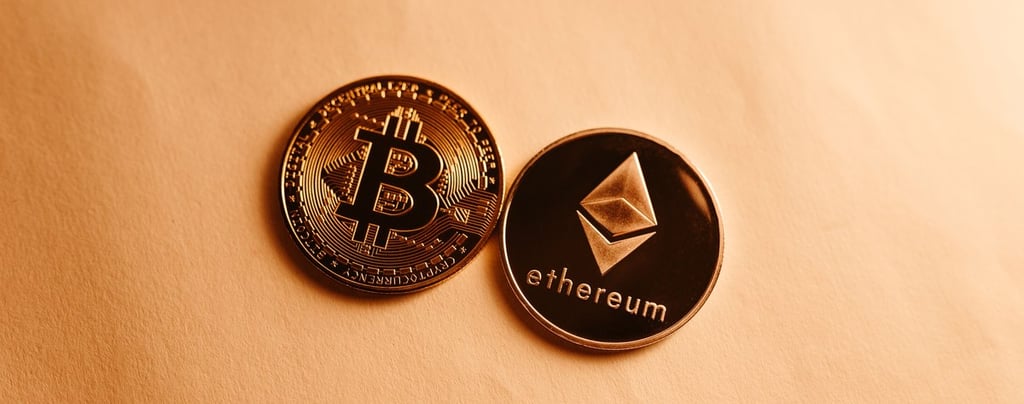
Bitcoin and Ethereum: What Is the Difference?
Bitcoin was designed primarily as a decentralized form of digital money.
Users can send and receive Bitcoin through wallet addresses, while private keys are used to authorize transactions. Losing control of those private keys can mean losing access to the funds.
Ethereum has a broader purpose.
It is a decentralized blockchain network and software platform powered by its native cryptocurrency, ether, commonly called ETH. Developers can use Ethereum to create smart contracts and decentralized applications related to finance, gaming, digital assets, and other services.
A simple way to understand the difference is:
Bitcoin focuses mainly on storing and transferring value.
Ethereum also provides infrastructure for applications and programmable transactions.
Both are cryptocurrencies, but they serve different purposes.
Why Do Cryptocurrency Prices Change So Much?
Cryptocurrency prices are influenced by supply, demand, investor sentiment, regulation, technology, competition, and market speculation.
Unlike a profitable company, many cryptocurrencies do not produce earnings, pay dividends, or own physical assets.
Their value often depends heavily on what buyers believe the asset may be worth in the future.
When confidence rises, prices can increase quickly. When fear spreads, the same market can collapse just as fast.
This volatility attracts people who hope to make large profits.
Unfortunately, it also attracts beginners who buy only because prices are rising.
The danger usually begins when someone invests because of excitement rather than research.
Coins, Tokens, and Stablecoins
Although people often use these terms interchangeably, they are not always the same.
A coin normally operates on its own blockchain. Bitcoin and ether are common examples.
A token is usually created on top of an existing blockchain. Thousands of tokens have been built on Ethereum for different applications and projects.
A stablecoin is designed to maintain a relatively stable value, often by being connected to a currency such as the U.S. dollar.
Stablecoins may reduce some price volatility, but they are not automatically risk-free. Their safety can depend on reserves, management, technology, regulation, and the ability of the issuer to honor redemptions.
The name of an asset should never replace proper research.
What Is a Cryptocurrency Wallet?
A cryptocurrency wallet is a tool that allows you to interact with your digital assets.
Depending on the wallet, you may be able to view your balance, receive funds, send transactions, connect to applications, and manage different accounts.
There are two main approaches to holding cryptocurrency.
Custodial Wallets
With a custodial wallet, a company or exchange controls the keys associated with your assets.
This is often easier for beginners because the platform may help recover an account or reset a password.
The disadvantage is that you are trusting another company with your money. If that business experiences financial trouble, fraud, or a serious security failure, your assets may be at risk.
Self-Custody Wallets
With self-custody, you control your own private keys or recovery phrase.
This gives you greater control, but it also gives you greater responsibility.
If you lose your recovery phrase, send assets to the wrong address, or allow someone to steal your keys, there may be no bank or customer-service department capable of reversing the mistake.
In traditional finance, forgetting a password can be inconvenient. In cryptocurrency, it can be permanent.
The Biggest Risks Beginners Should Understand
Cryptocurrency investing involves more than price risk.
Beginners should also consider:
Extreme market volatility
Fraudulent projects
Exchange failures
Wallet theft
Lost passwords or recovery phrases
Fake investment platforms
Regulatory uncertainty
Technical mistakes
Tokens with little real demand
Influencers promoting assets they already own
Another important risk is liquidity.
A token may appear valuable on a trading screen, but that does not guarantee you will find buyers when you want to sell.
A displayed price is not always the same as money safely available in your bank account.
How Cryptocurrency Scams Work
Cryptocurrency transactions can be difficult or impossible to reverse, which makes them attractive to scammers.
Common scams include fake investment managers, celebrity impersonations, romance scams, fraudulent exchanges, phishing links, and promises of guaranteed returns.
The Federal Trade Commission warns that legitimate investments do not guarantee quick profits and that unexpected requests to send cryptocurrency should be treated as serious warning signs.
Be especially careful when someone:
Guarantees profits
Pressures you to act immediately
Contacts you unexpectedly
Asks for your recovery phrase
Promises to multiply the crypto you send
Prevents you from withdrawing your money
Demands additional fees to release your supposed profits
Real investments involve risk. Anyone promising high returns without risk is probably selling a lie.
How to Research a Cryptocurrency
Before investing, understand what the project actually does.
Read its official documentation and investigate:
The problem it claims to solve
Who created it
How the token is distributed
Whether the network is actively used
How many tokens exist
Whether new tokens can be created
How the developers earn money
Whether ownership is highly concentrated
What risks are disclosed
Whether the project has survived previous market declines
Social-media popularity is not evidence of long-term value.
A professional website, a famous supporter, or a large online community can make a project appear legitimate. None of those things guarantees that the investment is sound.
How Much Should a Beginner Invest?
A beginner should never invest money needed for rent, food, bills, emergencies, or short-term goals.
Cryptocurrency should generally be treated as a high-risk part of a broader financial plan—not as the entire plan.
Starting with a small amount can help you learn how buying, selling, wallets, fees, and market movements work without exposing your finances to unnecessary danger.
The amount may feel unexciting.
That is often a good sign.
Responsible investing is not supposed to feel like gambling at a casino.
A Safer Way to Begin
Before purchasing cryptocurrency:
Build an emergency fund.
Pay attention to expensive debt.
Research the asset carefully.
Choose a reputable platform.
Activate strong security and two-factor authentication.
Never share your recovery phrase.
Make a small test transaction first.
Understand every fee involved.
Decide how much you are willing to lose.
Avoid making decisions based on fear or hype.
You should also check the tax and regulatory rules in your country. Cryptocurrency requirements vary between jurisdictions and may change over time.
Should You Invest in Cryptocurrency?
Cryptocurrency may offer exposure to new technology and alternative financial systems, but it is not suitable for everyone.
Someone who cannot tolerate major price declines may struggle with the volatility. A person who refuses to study security may be unprepared to manage a wallet. Anyone searching for guaranteed profits is entering the market with the wrong expectation.
The most important lesson is not which cryptocurrency will rise next.
It is learning how to protect your money before trying to grow it.
Crypto rewards curiosity, but it can punish impatience. Beginners who slow down, research carefully, and invest only what they can afford to lose are far more prepared than those chasing the next viral coin.
Understanding the risks will not eliminate them.
But it can prevent a promising investment from becoming an expensive lesson.
Continue Reading
Finance Atlas
Demystifying global markets, compounding structural wealth.
Sitemap
Home
Articles
Categories
About
Contact
Privacy
Inquiries
financeatlascontact@gmail.com
Response within one business day
© 2026 Finance Atlas-Independent financial intelligence.
Institutional Authority. Clear Utility.