
How Shaq Spent $1 Million in One Day
Discover how Shaquille O’Neal spent approximately $1 million before playing his first NBA game, the costly tax mistake he made, and the financial lesson that changed his life.
FINANCIAL EDUCATIONPERSONAL FINANCE
7/27/20268 min read
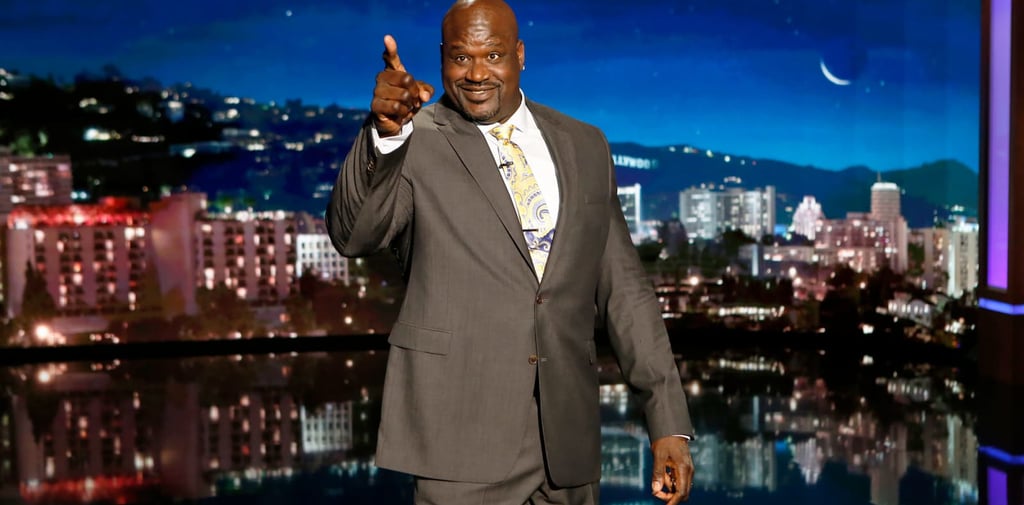
The money arrived before the wisdom did.
Shaquille O’Neal was only 20 years old, preparing to become one of the most anticipated players in the NBA. After growing up without much money, he suddenly received a seven-figure endorsement payment.
For most people, $1 million represents permanent financial security.
For young Shaq, it lasted less than a day.
He bought luxury cars, jewelry, suits, and gifts for his parents. Then his bank called with news he had not expected: after taxes and spending, he had gone beyond the money available in his account.
The experience embarrassed him, but it also taught him something many people discover too late.
Receiving money and knowing how to manage it are completely different skills.
The Million-Dollar Check
Before the Orlando Magic selected O’Neal with the first overall pick in the 1992 NBA Draft, he secured an endorsement deal that included a $1 million payment.
To someone who had never managed serious wealth, the number appeared simple.
One million dollars meant he had one million dollars available to spend.
But the amount written into a contract is not always the amount that reaches a bank account. Taxes, professional fees, and other deductions can reduce what remains.
Shaq has explained that he did not yet understand concepts such as income taxes, state taxes, sales taxes, or FICA—the payroll taxes connected to Social Security and Medicare.
He understood the size of the check.
He did not understand how much of it was truly his.
The Mercedes He Had Always Wanted
Shaq had dreamed of owning a Mercedes-Benz long before he became wealthy.
As a child, he reportedly played with a toy version and imagined buying the real car one day. When the endorsement money arrived, waiting no longer seemed necessary.
He purchased a black Mercedes for approximately $150,000.
Then his father wanted one.
His mother wanted one too.
One luxury car quickly became three, placing roughly $450,000 into vehicles before considering taxes, insurance, registration, customization, or depreciation.
Buying the cars for his parents came from generosity. Shaq had promised himself that success would allow him to improve his family’s life.
But generosity without a financial plan can still create financial damage.
A loving reason does not automatically make an unaffordable decision safe.
Cars Were Only the Beginning
The spending continued.
Shaq purchased jewelry, expensive suits, and other items that represented the lifestyle he believed a professional athlete was supposed to have.
The purchases were not necessarily random. They were symbols.
The cars represented success. The jewelry represented status. The gifts represented gratitude. The clothing represented his new identity as an NBA star.
Money often becomes most dangerous when people stop seeing it as money.
It becomes proof that they succeeded, evidence that they escaped the past, or permission to become the person they always imagined.
At that point, every purchase feels emotional—even when the receipt is financial.
The Call From the Bank
After the shopping, Shaq received a call from his bank manager.
According to his retelling, the manager told him that he had spent the available money and was approximately $80,000 overdrawn.
Shaq had believed he was spending a full $1 million. In reality, taxes and other deductions meant that significantly less was available.
The experience was deeply embarrassing.
Here was a young man preparing to become an NBA superstar, yet he had managed to create debt before playing his first professional game.
He was earning more than most people would see in a lifetime, but briefly had less control over his money than someone earning an ordinary paycheck and following a budget.
Income can hide financial weakness for a while.
It cannot permanently replace financial knowledge.
Did Shaq Really Spend It in One Day?
Shaq has told the story several times over the years.
Depending on the interview, the spending has been described as happening in roughly 30 minutes, 45 minutes, one hour, or within a single day.
The exact timing matters less than the central fact: the money disappeared almost immediately.
It was not lost through an economic recession, a failed company, or a sophisticated investment.
It was spent.
That distinction makes the story valuable because the mistake is not limited to professional athletes.
The numbers may be larger, but the behavior is familiar.
A worker receives a bonus and immediately upgrades a car. Someone receives a tax refund and treats it as free spending money. A person earns a raise, then increases monthly expenses until nothing remains.
The money changes.
The pattern does not.
The Tax Mistake Behind the Story
One of Shaq’s biggest mistakes was confusing gross income with spendable income.
Gross income is the amount earned before taxes and deductions.
Net income is what remains afterward.
For example, a person offered a $100,000 salary does not receive $100,000 in spendable cash. Federal income tax, state and local taxes where applicable, Social Security, Medicare, health insurance, retirement contributions, and other deductions can reduce each paycheck.
The same principle applies to endorsement income, business income, bonuses, freelance work, and investment gains, although the tax treatment can differ.
A million-dollar contract may create the feeling of being a millionaire.
That feeling can disappear when the tax bill arrives.
Taxes are not an expense that appears after financial planning. They must be part of the plan from the beginning.
The Difference Between Being Rich and Staying Rich
Shaq’s spending did not destroy his future because he learned from it early.
He was about to begin an exceptional NBA career and had the ability to generate substantial income through basketball, endorsements, entertainment, and business.
Most people do not receive another million-dollar opportunity after making a million-dollar mistake.
That is why the lesson matters more than the recovery.
High earners often believe future income will repair current decisions. Sometimes it does. But relying on money that has not yet arrived creates a fragile financial life.
A career can end.
A contract can disappear.
An injury can change earning power.
A business opportunity can fail.
Wealth is not measured only by how much money enters your life. It is measured by how much remains useful after your decisions are finished.
The Advisor Who Changed His Direction
After the experience, Shaq recognized that he needed professional guidance.
He has said he interviewed financial advisors because he did not want to become another athlete who earned millions and later lost everything.
Many advisors focused on how they could make him richer.
The advisor who earned his trust reportedly took a different approach. He emphasized protecting the money, creating an appropriate business structure, and helping Shaq understand what he owned.
That difference mattered.
Young Shaq did not need someone promising exciting returns. He needed someone capable of creating boundaries around his new wealth.
A good financial professional should not make money feel more impressive.
The professional should make the decisions surrounding it more intelligent.
Shaq has credited the lesson and the guidance that followed with changing how he approached his finances and business opportunities.
Why Sudden Wealth Can Be Dangerous
People imagine sudden wealth as the end of financial stress.
In reality, it can introduce problems that never existed before.
A person receiving a large amount of money may face:
Pressure from friends and relatives
Lifestyle expectations
Complicated tax obligations
Aggressive salespeople
Risky investment opportunities
Fear of appearing selfish
A desire to reward years of sacrifice
Little experience managing large balances
The money arrives immediately.
Financial maturity usually does not.
Someone who learned to manage $2,000 per month does not automatically know how to manage $2 million. Larger numbers create different responsibilities, risks, and temptations.
Sudden wealth does not change a person’s financial habits.
It magnifies them.
Generosity Still Needs Boundaries
Some of Shaq’s spending was motivated by his desire to take care of his parents.
That part of the story is easy to understand.
Many people dream of paying off a parent’s debts, buying a family home, or giving loved ones the comfort they never had.
There is nothing wrong with that goal.
The danger begins when generosity has no limit.
Before making a large gift, a person should understand:
The tax consequences
The effect on personal savings
Whether the purchase creates ongoing expenses
Who will pay for insurance and maintenance
Whether the gift is affordable without future income
Whether emotional pressure is influencing the decision
Buying someone a luxury vehicle does not end with the purchase price. Fuel, maintenance, insurance, registration, and repairs continue long afterward.
Real generosity should improve two financial lives—not rescue one person while quietly weakening another.
Lifestyle Inflation Happens at Every Income Level
Shaq’s story is extreme, but lifestyle inflation affects ordinary households every day.
Lifestyle inflation happens when spending rises along with income.
A person receives a raise and immediately moves into a more expensive apartment. A promotion becomes a reason to finance a newer car. A bonus creates a new monthly payment that continues long after the bonus is gone.
The person earns more but never feels wealthier because every additional dollar is assigned to a more expensive lifestyle.
This creates a strange financial reality:
Someone can look increasingly successful while becoming increasingly dependent on the next paycheck.
Appearing wealthy and becoming wealthier are not the same goal.
One attracts attention today.
The other creates options tomorrow.
What Shaq’s Story Teaches About Large Windfalls
A windfall can come from an inheritance, bonus, legal settlement, business sale, lottery prize, or investment gain.
The safest first move is often to do very little.
Before spending a large amount:
Calculate What Remains After Taxes
Do not create a spending plan based on the gross number.
A tax professional can help estimate federal, state, and other obligations connected to the money.
Place the Money Somewhere Safe
A temporary holding period can create distance between emotion and action.
The purpose is not to delay forever. It is to prevent the first week of excitement from controlling the next several decades.
Pay Off the Right Debts
Eliminating high-interest debt may provide a strong and predictable financial benefit.
However, not every loan needs to be paid immediately without considering interest rates, liquidity, and broader goals.
Build a Cash Reserve
A windfall can disappear surprisingly quickly when every dollar is invested, gifted, or spent.
Keeping appropriate emergency savings protects the rest of the plan.
Create Limits for Gifts
Decide in advance how much can be used to help family and friends.
Boundaries are easier to establish before requests begin.
Avoid Immediate Lifestyle Commitments
A one-time payment should not automatically create permanent monthly expenses.
Buying an expensive house, vehicle, or boat can require years of taxes, maintenance, insurance, and operating costs.
The purchase happens once.
The lifestyle sends a bill every month.
Why Cars Can Be Financially Deceptive
The Mercedes purchases were the most memorable part of Shaq’s story because cars are visible symbols of success.
They are also rapidly depreciating assets in many cases.
A vehicle can lose value while continuing to create expenses through:
Insurance
Fuel
Maintenance
Repairs
Registration
Financing interest
Storage
Customization
This does not mean nobody should buy an expensive vehicle.
It means the purchase should fit inside a larger financial plan.
The ability to make a payment is not the same as the ability to comfortably own what the payment purchases.
Shaq could eventually afford extraordinary cars.
The mistake was buying them before understanding the money supporting them.
Financial Education Matters More Than Income
Shaq’s early mistake challenges a common belief: that earning more automatically solves money problems.
Income creates opportunity.
Education determines what happens to it.
Someone earning $50,000 and consistently saving, investing, and avoiding expensive debt may build more lasting security than someone earning $500,000 while spending every dollar.
A larger income makes financial mistakes easier to survive.
It does not make them intelligent.
Without basic knowledge of taxes, budgeting, debt, investing, and cash flow, even an extraordinary paycheck can become temporary.
Money does not arrive with instructions.
That responsibility belongs to the person receiving it.
The Mistake That Became an Investment in Knowledge
Spending $1 million so quickly was undeniably expensive.
But the experience happened early enough to change Shaq’s direction.
He learned that large earnings required professional structure. He learned that taxes could not be ignored. He learned that wealth needed protection, not only celebration.
The mistake became valuable because he allowed it to teach him.
Everyone makes financial decisions they would handle differently today. The true cost of a mistake is not only the money lost.
It is whether the same lesson must be purchased again.
Shaq’s story is memorable because the number is enormous.
Its message is much simpler:
A person can earn money through talent, luck, work, or opportunity. Keeping it requires discipline that income alone cannot provide.
The first million dollars changed Shaq’s lifestyle for a day.
Understanding how quickly it disappeared helped change the rest of his financial life.
Continue Reading
Finance Atlas
Demystifying global markets, compounding structural wealth.
Sitemap
Home
Articles
Categories
About
Contact
Privacy
© 2026 Finance Atlas-Independent financial intelligence.
Institutional Authority. Clear Utility.