
How Warren Buffett Built His Fortune Through Patience
Discover how Warren Buffett transformed patience, disciplined investing, business ownership, and decades of compounding into one of the greatest fortunes in history—and learn how beginners can apply the same principles.
BILLIONAIRE STORIESINVESTING
7/25/20268 min read
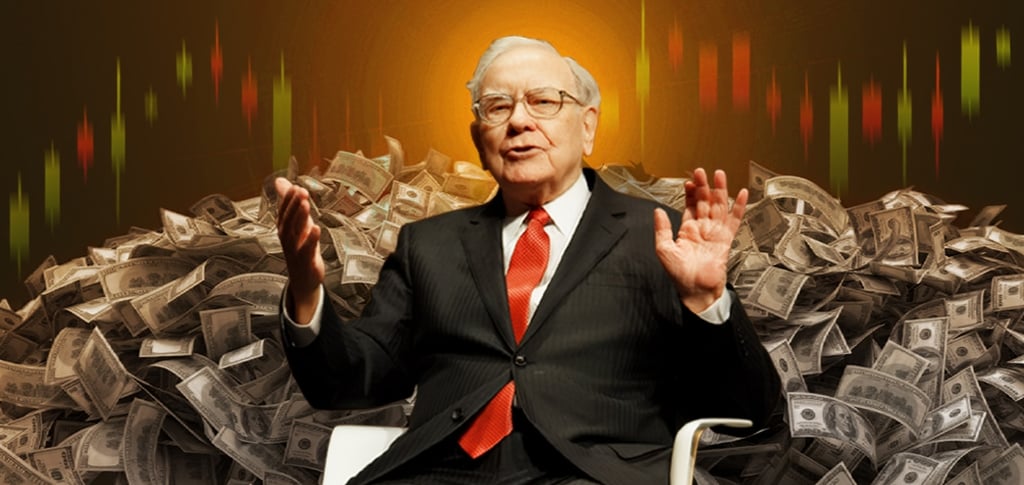
The stock market gives investors thousands of opportunities to buy and sell every day.
Warren Buffett built one of history’s greatest fortunes by ignoring most of them.
While other investors chased exciting trends, predicted short-term prices, and reacted to every market headline, Buffett followed a quieter strategy. He studied businesses carefully, waited for attractive opportunities, invested with conviction, and often allowed his holdings to grow for decades.
That may sound simple.
In reality, waiting while everyone else appears to be making money requires an extraordinary amount of discipline.
The truth is that Buffett’s greatest advantage was not the ability to predict every market movement. It was the patience to let strong businesses, retained earnings, and compounding do their work.
From a Struggling Textile Company to an Investment Empire
Buffett took control of Berkshire Hathaway in 1965.
At the time, Berkshire was primarily a declining textile business. Buffett later acknowledged that buying it had been a mistake because the company appeared inexpensive while its underlying industry was slowly disappearing.
But instead of allowing that mistake to define Berkshire’s future, he gradually redirected its capital into more attractive businesses.
The company expanded into insurance, railroads, energy, manufacturing, retail, and investments in publicly traded companies.
Buffett served as Berkshire’s chief executive from 1970 through the end of 2025 and continues as chairman. Over those decades, the former textile operation became one of the world’s most valuable companies.
This transformation contains an important lesson.
A bad beginning does not always require abandoning the entire journey. Sometimes progress comes from recognizing what is not working and patiently moving resources toward better opportunities.
Insurance Provided Capital That Could Compound
One of Buffett’s most important decisions was expanding Berkshire into insurance.
The company acquired National Indemnity in 1967 and later built a large insurance operation that included businesses such as GEICO and major reinsurance activities.
Insurance companies frequently receive premiums before they must pay claims.
The money temporarily held between those two moments is known as insurance float.
When managed responsibly, float can be invested until it is needed. Berkshire used this capital to purchase stocks, acquire entire businesses, and expand existing operations.
The concept is powerful, but it is not free money.
An insurer that charges inadequate prices or underestimates future claims can suffer enormous losses. Berkshire’s advantage came from combining investment skill with disciplined underwriting.
Buffett was not simply searching for capital.
He wanted capital that could remain available long enough for compounding to become meaningful.
He Bought Businesses, Not Moving Prices
Many investors look at a stock and see a chart.
Buffett looked at a stock and saw partial ownership of a company.
That difference shaped nearly every major decision.
Before investing, Berkshire typically considered questions such as:
Is the business understandable?
Does it have a durable competitive advantage?
Can it remain profitable for many years?
Is management honest and capable?
Is the price reasonable compared with the company’s long-term value?
Berkshire’s current capital-allocation principles still emphasize understandable businesses, durable advantages, high-integrity leaders, disciplined decisions, and allowing compounding to unfold.
This approach naturally reduces unnecessary trading.
When you believe you own part of an excellent business, a temporary decline in its stock price does not automatically mean the investment has failed.
Sometimes it simply means the market has become frightened.
Waiting for the Right Opportunity
Buffett frequently compared investing to a baseball player waiting for the right pitch.
The difference is that an investor is not forced to swing.
You can examine hundreds of companies and purchase none of them. You can keep cash available until an opportunity offers an attractive relationship between potential reward and risk.
Berkshire’s 2025 annual report described Buffett’s approach as identifying preferred opportunities, waiting patiently, and then acting decisively.
This is where patience becomes an active skill.
Waiting does not mean being confused or afraid.
It means refusing to invest simply because you feel pressure to do something.
The market does not reward activity by itself. Buying the wrong investment quickly is not better than purchasing the right one slowly.
Letting Great Companies Continue Growing
Finding a strong company is only the first part of the process.
The investor must also resist selling it too soon.
Berkshire’s long-standing positions in American Express and Coca-Cola illustrate what can happen when ownership is maintained while profitable businesses continue operating.
At the end of 2025, Berkshire reported an original cost basis of approximately $1.29 billion for its American Express shares, which had a market value of about $56.1 billion. Its Coca-Cola position had a cost basis of approximately $1.30 billion and a market value close to $28 billion. Together, those two holdings also generated more than $1.29 billion in dividends during 2025.
Those results were not created by constant buying and selling.
They were created by purchasing ownership in valuable businesses and giving them decades to increase earnings, distribute dividends, and strengthen their competitive positions.
Interestingly, selling earlier would still have produced a profit.
It simply would not have produced the same fortune.
Reinvestment Accelerated the Process
Berkshire has rarely distributed cash dividends to its own shareholders.
Between 1965 and 2024, the company paid only one cash dividend, issued in 1967. Instead, earnings were generally retained and reinvested in businesses, stocks, acquisitions, and other opportunities.
That decision allowed money earned in one year to help produce additional earnings in future years.
The process looked something like this:
Berkshire’s businesses generated profits.
Buffett retained much of that money.
The capital was invested in new opportunities.
Those investments produced additional profits.
The larger amount was invested again.
This cycle continued for decades.
At first, compounding may appear almost unimpressive. The early gains are being calculated on a relatively small base.
Eventually, however, the accumulated capital becomes so large that even a moderate percentage increase can create billions in additional value.
Patience gave the mathematics enough time to become extraordinary.
The Numbers Behind the Compounding
From 1965 through 2025, Berkshire’s per-share market value recorded a compounded annual gain of 19.7%, compared with 10.5% for the S&P 500 with dividends included.
Over the full 1964–2025 period, Berkshire reported an overall gain of approximately 6,099,294%, compared with about 46,061% for the index.
Past performance does not guarantee future results, and ordinary investors should not expect to reproduce those numbers.
But the comparison demonstrates the enormous difference that a higher return can create when it compounds for more than six decades.
A few percentage points may not look dramatic during one year.
Across a lifetime, they can separate an excellent result from a historic one.
Patience Did Not Mean Ignoring Mistakes
Buffett’s reputation can make it seem as though every decision he made was correct.
It was not.
He openly described the original Berkshire textile investment as a mistake. He has also acknowledged errors involving company economics, management decisions, and capital allocation.
In his 2024 shareholder letter, Buffett explained that problems cannot simply be wished away and that delaying the correction of mistakes can make them more damaging.
This reveals an important difference between patience and stubbornness.
Patience means giving a good investment enough time to work.
Stubbornness means refusing to admit when the original reasoning was wrong.
A patient investor does not sell merely because prices fall.
But they should reconsider an investment when the company’s fundamentals, leadership, competitive position, or long-term prospects have permanently deteriorated.
He Controlled His Emotions During Market Declines
Market crashes create the conditions in which patience becomes most difficult—and most valuable.
When prices decline quickly, investors rarely feel calm. News becomes negative, predictions become frightening, and selling can appear to be the only responsible decision.
Buffett understood that falling prices do not automatically mean businesses have lost the same amount of long-term value.
For an investor with available cash and a long time horizon, lower prices can create better opportunities.
That does not mean buying every declining stock.
Some companies fall because their businesses are genuinely failing.
The skill is separating temporary fear from permanent damage.
Buffett’s wealth was not created because markets always moved in his favor. It was created partly because he remained rational during periods when other investors allowed fear or excitement to control their decisions.
He Maintained Significant Ownership
Buffett’s personal fortune remained closely connected to Berkshire Hathaway because he retained a large ownership position rather than repeatedly selling shares to fund a dramatically expanding lifestyle.
As of Berkshire’s 2026 proxy filing, he remained its largest shareholder, holding approximately 13.7% of the company’s economic interest and about 30% of its voting power.
This is another important distinction.
Buffett did not become extraordinarily wealthy through salary alone.
He became wealthy by owning a significant portion of an asset whose value compounded over many decades.
Income pays you for work already performed.
Ownership allows you to participate in the future growth of something larger than your individual labor.
A Simple Lifestyle Protected the Strategy
Buffett became known for maintaining a relatively modest personal lifestyle compared with the size of his fortune.
The deeper lesson is not that everyone must avoid comfort or refuse to enjoy money.
It is that wealth compounds more effectively when it is not constantly removed from productive assets.
Every dollar taken from an investment loses the possibility of producing future returns.
A more expensive lifestyle may appear affordable after a successful year. But when each increase in wealth creates an equal increase in spending, less capital remains available to grow.
Buffett understood that appearing wealthy and becoming wealthier are not the same goal.
One attracts attention.
The other requires keeping money invested.
His Fortune Was Not the Final Purpose
Buffett has also committed the overwhelming majority of his wealth to philanthropy.
In 2010, he helped create the Giving Pledge, through which wealthy individuals promise to give most of their fortunes to charitable causes during their lifetimes or through their estates.
This adds another dimension to his financial story.
The fortune was built through ownership and patience, but it was not intended to remain permanently concentrated in one family.
Money can provide independence, security, and opportunity.
At an extraordinary scale, it can also become a resource capable of influencing lives far beyond its original owner.
What Beginners Can Learn from Buffett
Most beginners cannot analyze companies with Buffett’s experience, purchase entire businesses, or use billions in insurance float.
They can still apply the principles behind his success.
Invest in What You Understand
Do not purchase an investment simply because it is popular.
Understand how it earns money, what risks it faces, and why it might remain valuable.
Think Like an Owner
A stock is not only a price.
It represents ownership in a business with products, employees, customers, assets, debts, and competitors.
Give Compounding Time
Small investments rarely create dramatic results immediately.
Their power develops through regular contributions, reinvested returns, and years of uninterrupted growth.
Avoid Unnecessary Trading
Activity can feel productive without actually improving your results.
Every trade should have a clear reason beyond boredom, fear, or excitement.
Keep Costs and Debt Under Control
Fees, taxes, and high-interest debt reduce the capital available to compound.
Protecting money can be as important as earning it.
Diversify Appropriately
Buffett and Berkshire sometimes concentrated capital in high-conviction opportunities, but most beginners do not have the same access, knowledge, or ability to analyze individual companies.
A diversified, low-cost fund may be a more practical foundation for someone still learning.
Be Patient, but Not Blind
Allow strong investments time to develop.
At the same time, remain willing to admit when the facts have changed or the original decision was wrong.
The Fortune Was Built in the Waiting
Warren Buffett’s story is often presented as evidence of exceptional intelligence.
Intelligence mattered.
But intelligence without emotional discipline can still lead an investor to panic during crashes, chase popular assets, trade constantly, or sell great companies too early.
Buffett’s fortune grew because he repeatedly made sensible decisions and then gave those decisions something most people struggle to provide:
time.
He waited for attractive prices.
He waited for businesses to increase their earnings.
He waited while dividends and retained profits accumulated.
He waited through recessions, market crashes, technological changes, political uncertainty, and decades of predictions that his strategy had become outdated.
Patience did not make every investment successful.
It allowed the successful ones to become enormous.
That may be the most valuable lesson behind his fortune.
You do not always need to discover more opportunities.
Sometimes you need the discipline to hold the right ones long enough.
Continue Reading
Finance Atlas
Demystifying global markets, compounding structural wealth.
Sitemap
Home
Articles
Categories
About
Contact
Privacy
Inquiries
financeatlascontact@gmail.com
Response within one business day
© 2026 Finance Atlas-Independent financial intelligence.
Institutional Authority. Clear Utility.