
What Elon Musk Teaches About Economics and Innovation
Discover what Elon Musk's business strategies reveal about economics, innovation, entrepreneurship, and market disruption. Explore how his companies have influenced technology, competition, investment, and the global economy.
7/21/20264 min read
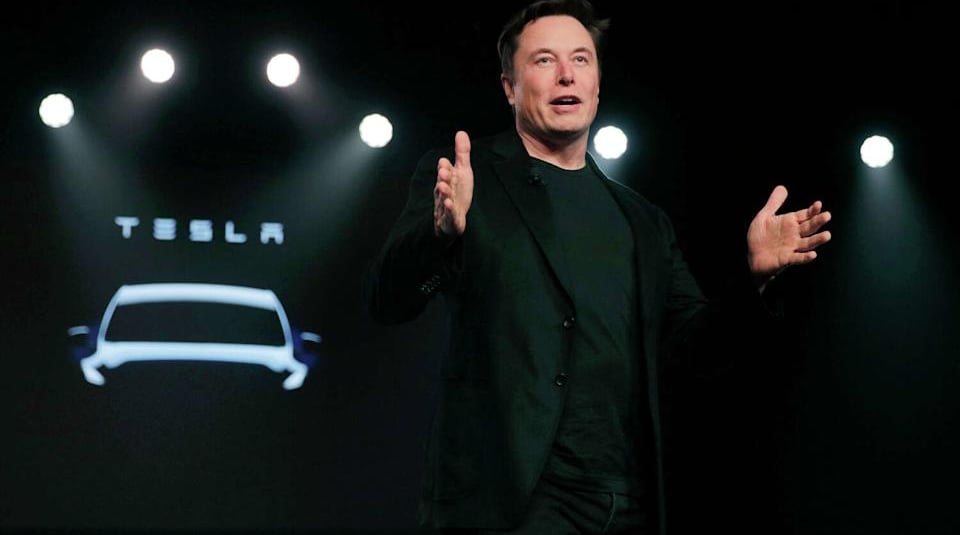
Few entrepreneurs have changed multiple industries as dramatically as Elon Musk.
From electric vehicles and reusable rockets to artificial intelligence and satellite internet, his companies have repeatedly challenged industries that many believed were too expensive, too competitive, or too difficult to disrupt.
Whether people admire him or criticize him, one thing is difficult to ignore: Musk has become one of the most influential business leaders of the 21st century.
But his impact goes far beyond technology.
His career offers valuable lessons about economics, innovation, competition, investment, and how markets evolve when ambitious ideas meet real-world business challenges.
Understanding these lessons helps explain not only Musk's success but also how modern economies reward innovation—and sometimes punish it.
Why Innovation Matters in Economics
Economic growth doesn't happen simply because people work more hours.
Over the long run, economies grow because they become more productive. Businesses discover better ways to manufacture products, reduce costs, improve technology, and create goods that previously didn't exist.
Innovation increases productivity, and productivity is one of the strongest drivers of long-term economic growth.
This is one reason economists often pay close attention to companies developing breakthrough technologies. Their influence extends well beyond their own profits, affecting suppliers, competitors, workers, and entire industries.
Few entrepreneurs demonstrate this process as clearly as Elon Musk.
Solving Expensive Problems
One of Musk's most recognizable business strategies is targeting industries where products are traditionally expensive or technically difficult to produce.
Electric vehicles were once considered luxury products with limited appeal.
Space launches were viewed as government-led projects that required enormous budgets.
Satellite internet was often seen as too costly for widespread adoption.
Instead of accepting those assumptions, Musk's companies focused on reducing costs through engineering improvements, vertical integration, and continuous product development.
Interestingly, economic innovation isn't always about inventing something completely new. Sometimes the biggest breakthrough comes from finding a dramatically cheaper or more efficient way to deliver an existing product.
Competition Drives Better Markets
When Tesla entered the automotive industry, many established manufacturers viewed electric vehicles as a niche market.
Today, nearly every major automaker is investing billions of dollars in electric vehicle development.
Competition played a significant role in that transformation.
Successful innovation often forces competitors to improve their own products. Companies that once ignored emerging technologies may eventually have little choice but to adapt.
Consumers usually benefit from this process through better products, more choices, and lower prices over time.
Innovation doesn't simply reward the company introducing change. It often pushes entire industries forward.
Taking Risks That Others Avoid
Most businesses prefer predictable markets.
Investors generally appreciate stable revenue, manageable risks, and gradual expansion.
Elon Musk has frequently taken the opposite approach.
His companies have entered industries requiring enormous upfront investment, years of research, and uncertain financial returns.
That strategy creates significant risk.
Some projects fail.
Others require years before becoming profitable.
Yet high-risk investments also create the possibility of exceptionally high rewards.
This reflects an important principle in economics: greater uncertainty often comes with the potential for greater returns. Of course, higher risk never guarantees success. Many ambitious companies fail despite having innovative ideas.
The Importance of Long-Term Thinking
Public companies often face pressure to deliver strong quarterly results.
Musk has repeatedly argued that some of the most valuable investments require patience measured in years rather than months.
Building battery factories, launching rockets, developing autonomous driving systems, or constructing satellite networks cannot usually be accomplished within a single financial quarter.
Many investors focus on immediate earnings.
Others evaluate whether today's spending could generate much larger returns in the future.
Understanding the difference helps explain why innovative companies sometimes appear expensive based on current profits but still attract long-term investors.
Markets don't only value what a business earns today—they also consider what it might earn tomorrow.
Failure as Part of Innovation
One of the less discussed aspects of innovation is failure.
SpaceX experienced multiple rocket failures before achieving successful launches.
Tesla faced production challenges during its early years.
Several Musk-led projects encountered delays, technical setbacks, and public criticism.
From an economic perspective, failure is not always wasted effort.
Businesses constantly test ideas, and unsuccessful experiments often generate valuable knowledge that improves future products.
This is one reason highly innovative industries rarely follow a straight path.
Progress often comes through repeated experimentation rather than immediate success.
Innovation Creates Entire Ecosystems
Large technology companies rarely succeed in isolation.
As Tesla expanded, demand increased for battery suppliers, charging infrastructure, software developers, mining companies, and renewable energy technologies.
SpaceX also created opportunities for satellite manufacturers, aerospace suppliers, engineering firms, and commercial space services.
Successful innovation frequently produces ripple effects across the broader economy.
One company's breakthrough may encourage hundreds of other businesses to develop complementary products and services.
Economic growth often spreads this way—through networks of businesses building on each other's success.
Not Every Innovation Succeeds
It's tempting to associate successful entrepreneurs with perfect decision-making.
Reality is usually far more complicated.
Some Musk projects have exceeded expectations.
Others have struggled, faced delays, or generated controversy.
This reminds us of an important economic lesson.
Markets reward innovation, but they also evaluate results.
Consumers ultimately decide whether a product solves a real problem.
Investors decide whether a business model appears sustainable.
Competition ensures that no company can rely on reputation alone forever.
Even the world's most successful entrepreneurs continue operating in markets where every new product must prove its value.
What Investors Can Learn
Many investors follow Elon Musk because of the companies he leads.
However, the most valuable lesson isn't necessarily about buying a particular stock.
It's about understanding the qualities that often drive long-term business success.
Innovative companies frequently share several characteristics:
They solve meaningful problems.
They invest heavily in research and development.
They improve products continuously.
They think beyond short-term results.
They create competitive advantages that are difficult to replicate.
These characteristics don't guarantee success, but they often help explain why certain businesses outperform others over long periods.
Looking beyond headlines and focusing on the underlying business model usually provides a clearer picture of a company's long-term potential.
The Bigger Picture
Elon Musk's career demonstrates how innovation can reshape industries, influence investment, and change the way economies evolve.
His companies have challenged traditional assumptions about transportation, energy, aerospace, and technology. Some initiatives have succeeded beyond expectations, while others continue facing significant obstacles.
That balance is worth remembering.
Innovation is rarely predictable. It involves uncertainty, experimentation, setbacks, and continuous improvement.
The broader lesson isn't that every ambitious idea will succeed or that every entrepreneur should follow Musk's approach. Rather, it's that economies tend to reward businesses capable of creating real value through better products, greater efficiency, and solutions to problems that matter.
In the end, technological breakthroughs don't transform economies overnight. They reshape markets gradually—one innovation, one investment, and one competitive challenge at a time.
Continue Reading
Finance Atlas
Demystifying global markets, compounding structural wealth.
Sitemap
Home
Articles
Categories
About
Contact
Privacy
Inquiries
financeatlascontact@gmail.com
Response within one business day
© 2026 Finance Atlas-Independent financial intelligence.
Institutional Authority. Clear Utility.